Product Designer at Hause
At Hause, I co-led product design and front-end development across the buyer and seller experiences, working closely with engineers to turn concepts into responsive interfaces. My scope spanned onboarding, artist discovery, profiles, purchasing, search, and seller analytics. I helped establish shared UI patterns and a more consistent visual language, with a focus on helping buyers find relevant work, making purchase decisions clearer, and giving artists better visibility into revenue, sales, and audience growth.
A more personal introduction to art
Art is personal. Discovering it should feel that way too. I explored an onboarding flow that asks people about their interests early, helping Hause introduce artists and artwork that reflect their taste.
The aim was to make those first moments feel less like entering a marketplace and more like finding a collection curated for you.

Making the purchase feel more confident
Buying from an independent artist can feel unfamiliar. I brought the artwork, artist, price, and next step into a clear hierarchy, with straightforward paths to message the seller or purchase a piece.
The confirmation gives the purchase its own moment: a simple receipt that keeps the artwork at the center.

Giving artists more room to be discovered
A marketplace starts with the people creating within it. I reworked discovery and artist profiles to give each artist more presence, making it easier to explore their work, follow them, and browse their collections.
Working with engineers, I translated those designs into responsive interfaces and shared UI patterns. The focus was simpler navigation and a clearer hierarchy that let the artwork lead without losing the person behind it.


Refining how people explore
The original discovery experience had several elements competing for attention. I explored a more focused layout that made artists easier to recognize and their work easier to browse.
From compact grids to larger featured pieces, I tested different artwork sizes and arrangements to balance visual variety with a consistent browsing rhythm.

Giving buyers more context
Higher-value purchases call for more context. I explored bringing price history into the artwork detail page so collectors could understand how a piece’s price had changed before deciding to buy.
The goal was greater transparency, not a promise of future returns.
Collecting a whole body of work
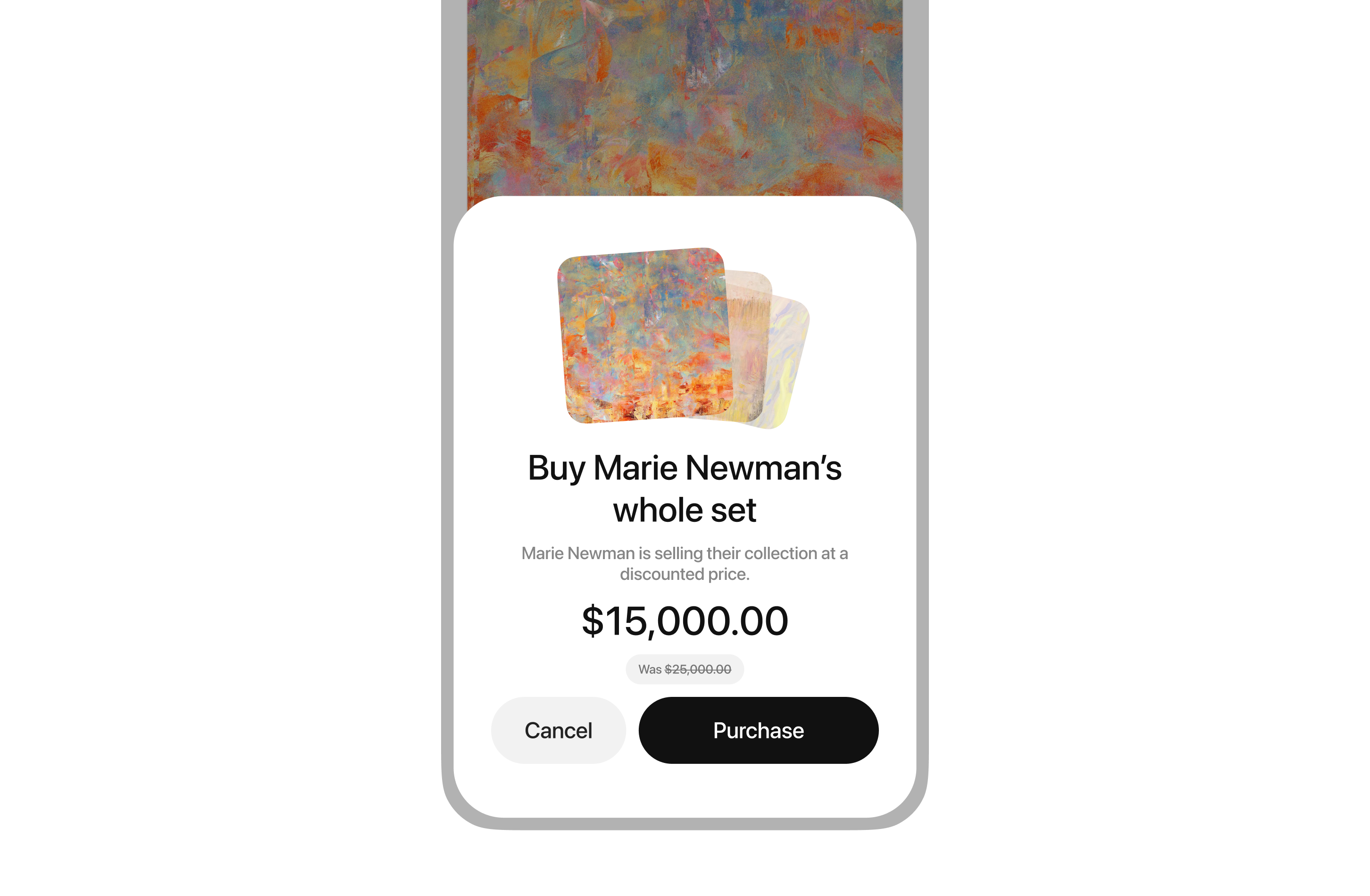
Artists don’t always create in individual pieces. I explored a way to purchase an entire collection together, with the combined price and any discount clearly displayed.
This gave artists another way to present their work while keeping the buying experience simple.
Finding the right piece
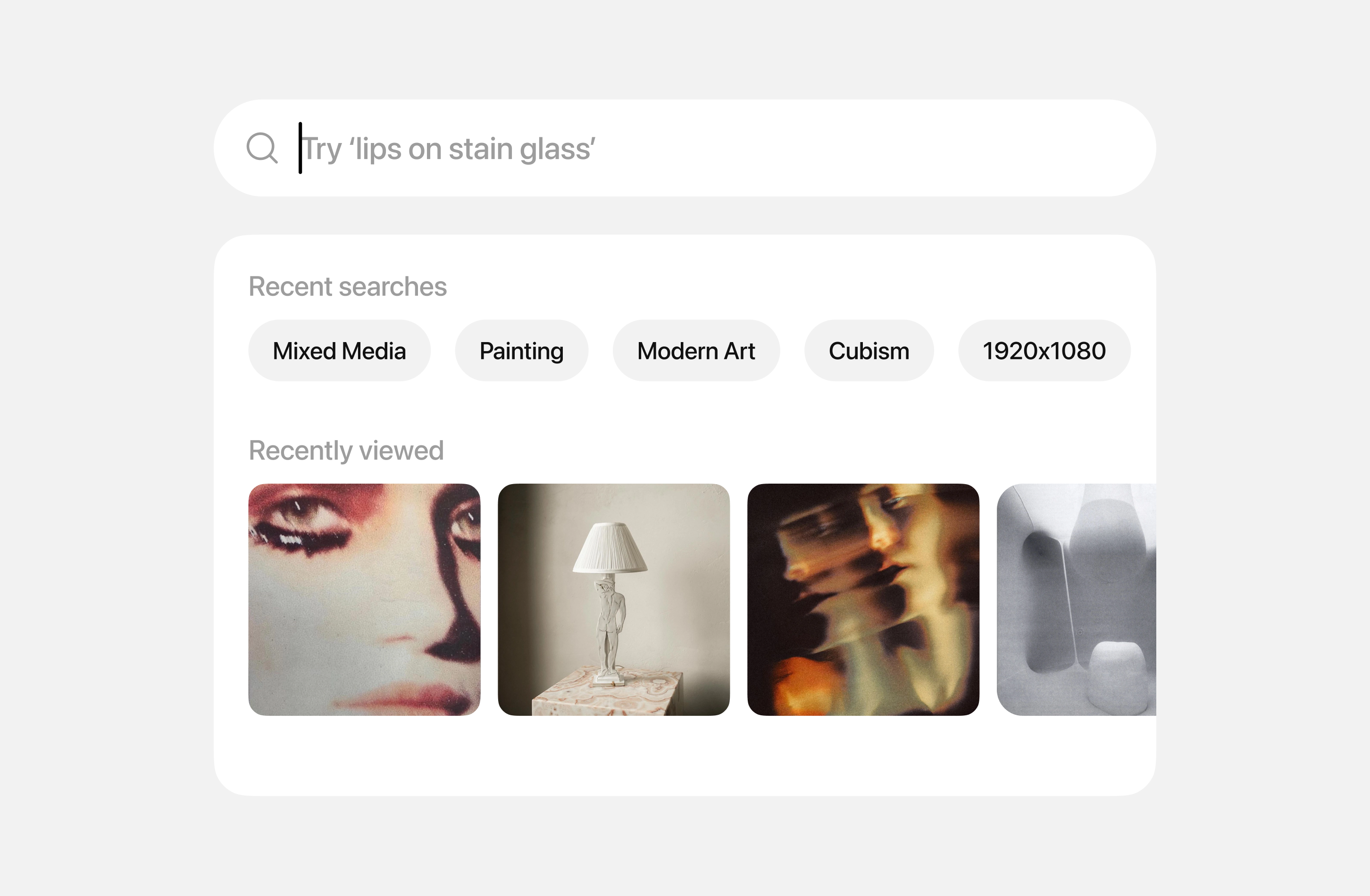
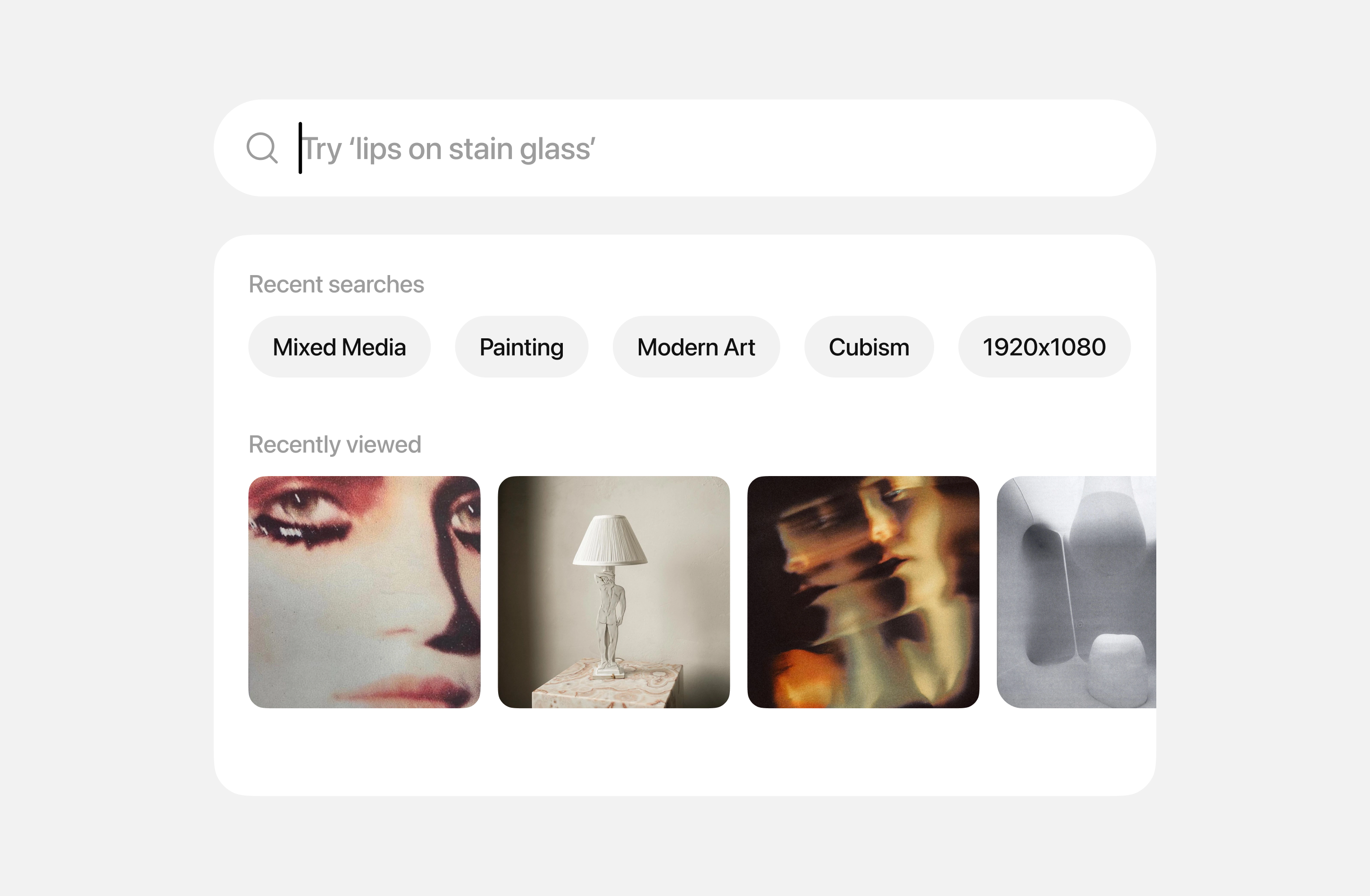
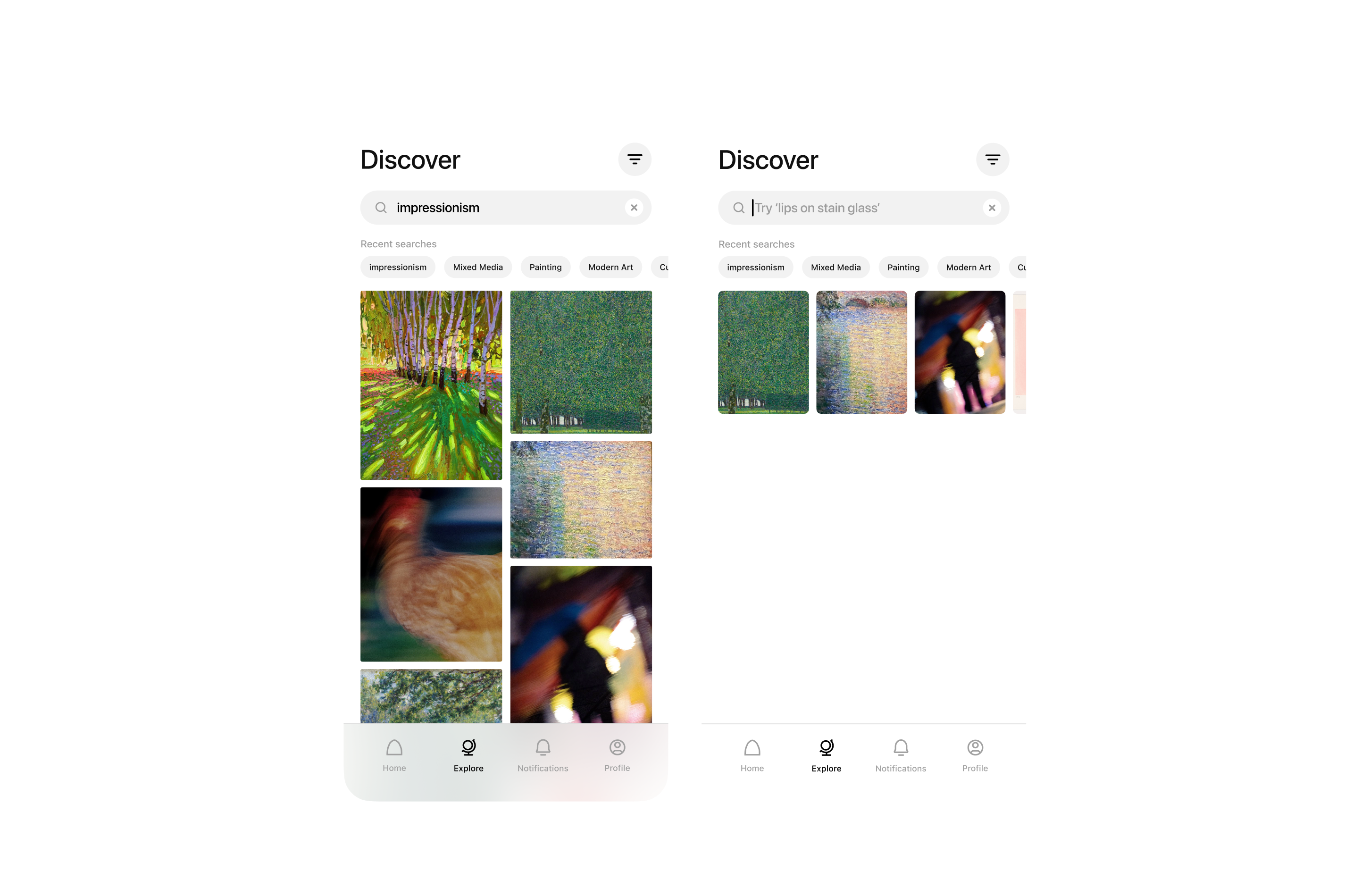
You shouldn’t need to know exactly what you’re looking for to find art you love. I explored search for both specific interests and casual browsing, using recent searches and previously viewed artwork to help people pick up where they left off.
A clearer picture of the business
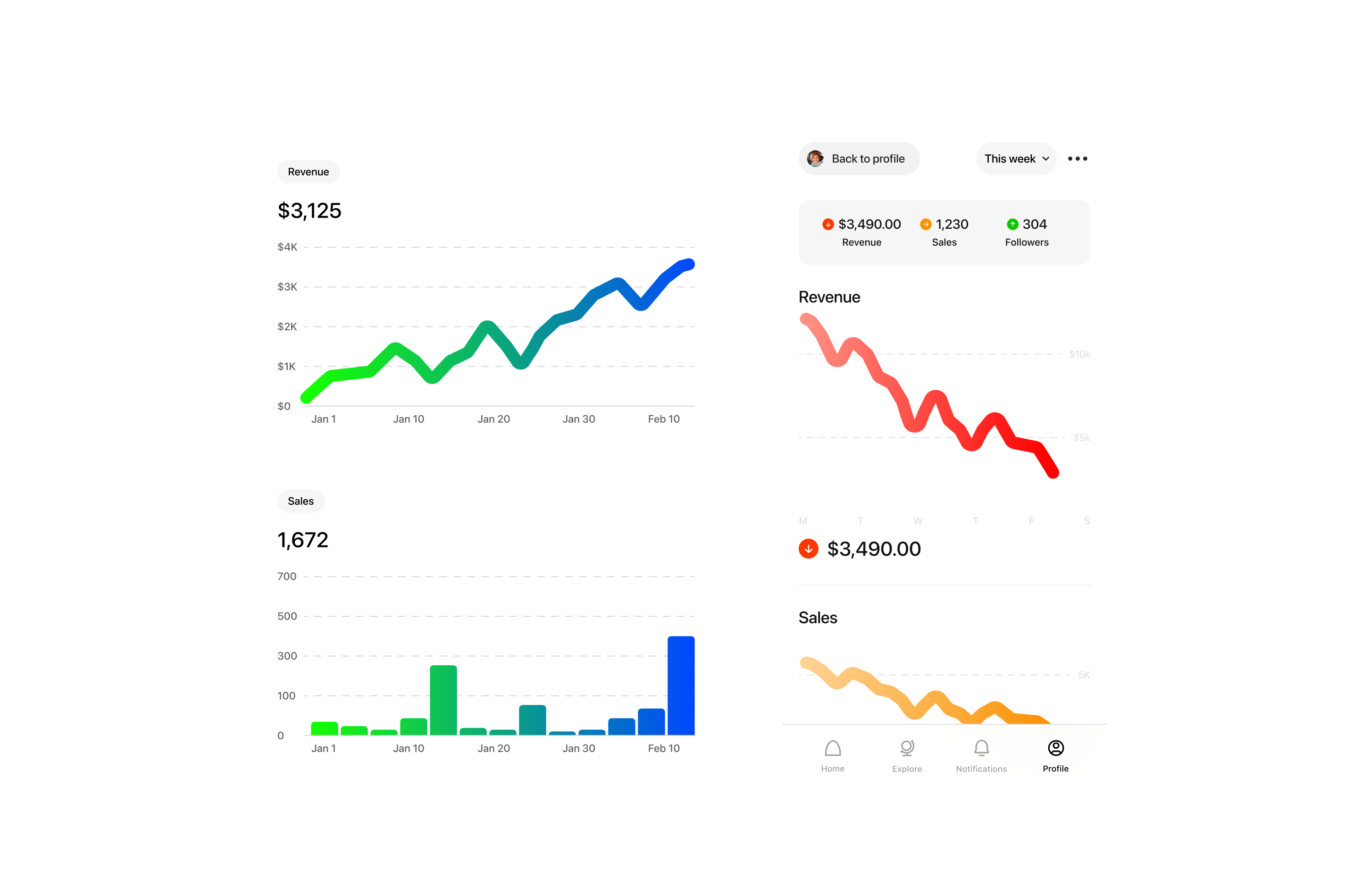
Supporting artists meant helping them understand how their work was performing, not just giving them a place to sell it.
I designed a dashboard around three core measures: revenue, sales, and follower growth. At-a-glance summaries, time filters, and focused charts were intended to help artists understand their performance without digging through complicated reports.