Product Designer at Paradox AI
Redesigned job discovery to bring custom customer implementations into a more consistent, configurable experience for candidates and the teams maintaining it.
At Paradox, I redesigned the Job List and Job Details experiences, working with Customer Success and Engineering to understand customer needs and technical constraints. My work covered search, configurable filters, responsive layouts, shared UI patterns, and AI summary explorations. The goal was to help candidates find relevant roles while giving customers a flexible product that didn’t depend on one-off implementations.
From custom implementations to a shared product
Years of customer requests had turned the Job List into a collection of different layouts, filters, and behaviors. Candidates encountered inconsistent experiences, while Engineering had to maintain each variation.
The challenge was to create one flexible foundation without losing the configuration customers relied on.

Finding the common ground
I audited existing experiences, worked with Customer Success to identify recurring requests, and partnered with Engineering to understand implementation constraints. Location stood out: candidates might not know an exact job title, but often knew where they wanted to work.
That informed search explorations, including semantic search and suggestions that could help people find relevant roles without matching a posting’s exact terminology.


Less information, clearer decisions
Early, denser layouts surfaced more job attributes but made titles and locations harder to scan. Customer-specific content also made those layouts unpredictable, especially on smaller screens.
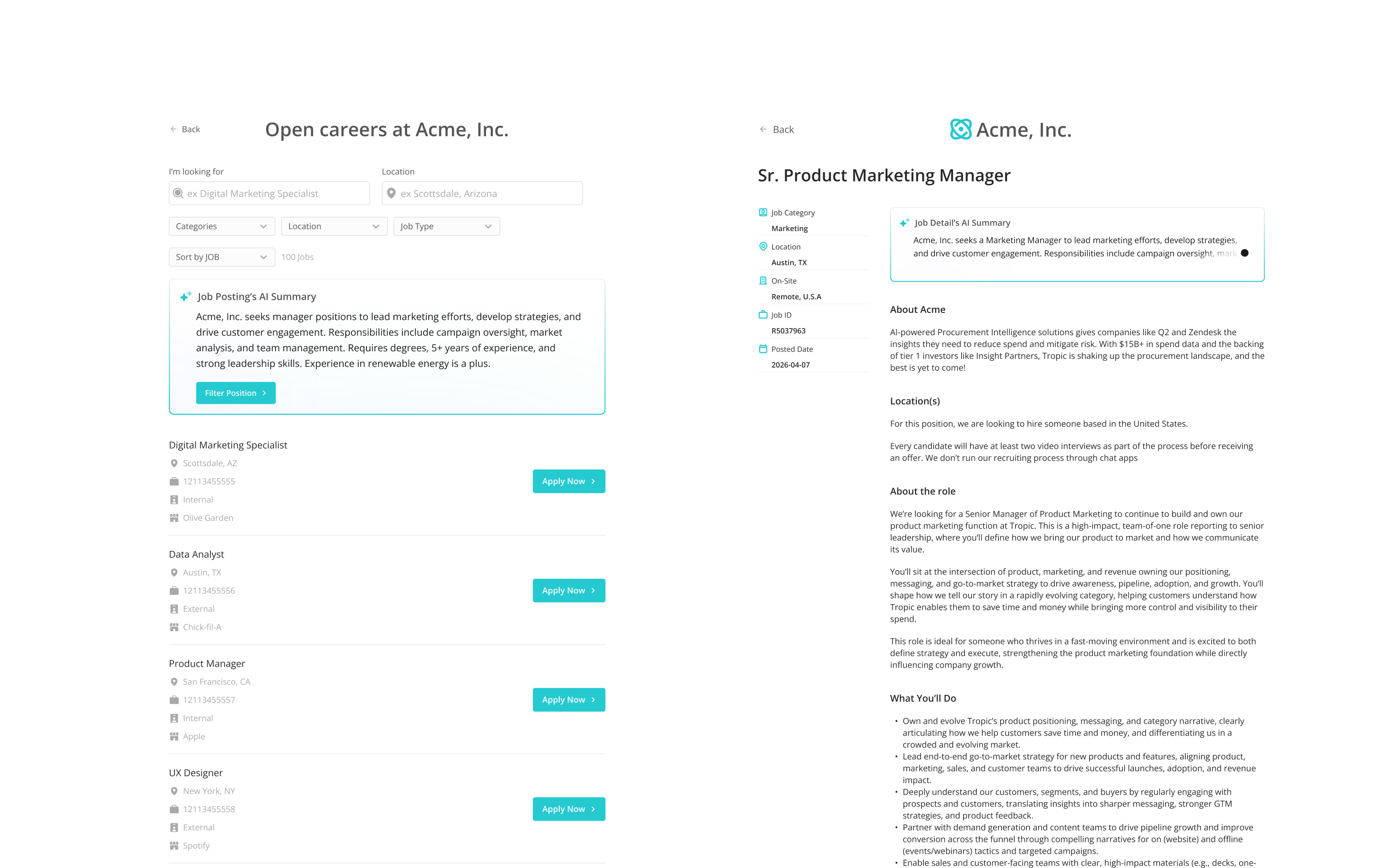
I simplified the listing hierarchy and designed a configurable filtering system. Customers could choose relevant filters while candidates used familiar, consistent controls—the same foundation, not a different product for every customer.


Making job details easier to navigate
Once candidates found a role, they needed to decide whether to apply. I separated key attributes such as location and employment type from the longer description, giving each a clearer place in the layout.
The structure needed to accommodate different branding, additional fields, and customer content without losing that hierarchy. I worked through those configuration needs alongside the candidate-facing design so the system could be reused rather than rebuilt.
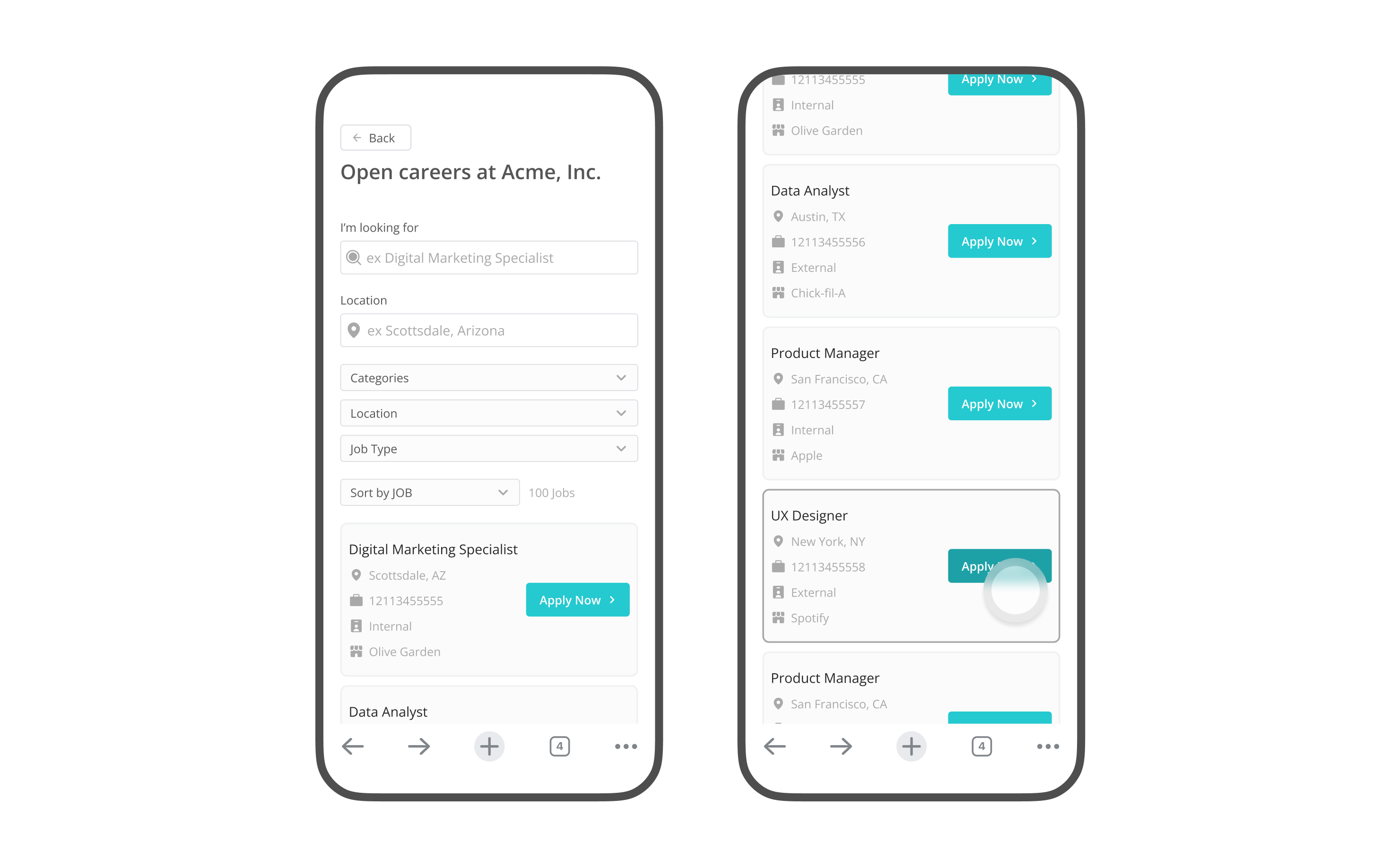
Finding the right balance on mobile
On smaller screens, search and filtering controls could push opportunities below the fold. I explored a more focused approach that prioritized browsing and moved additional filtering into a separate interaction.
The mobile work helped clarify the distinction between discovering available roles and refining the results.
AI as a supporting feature
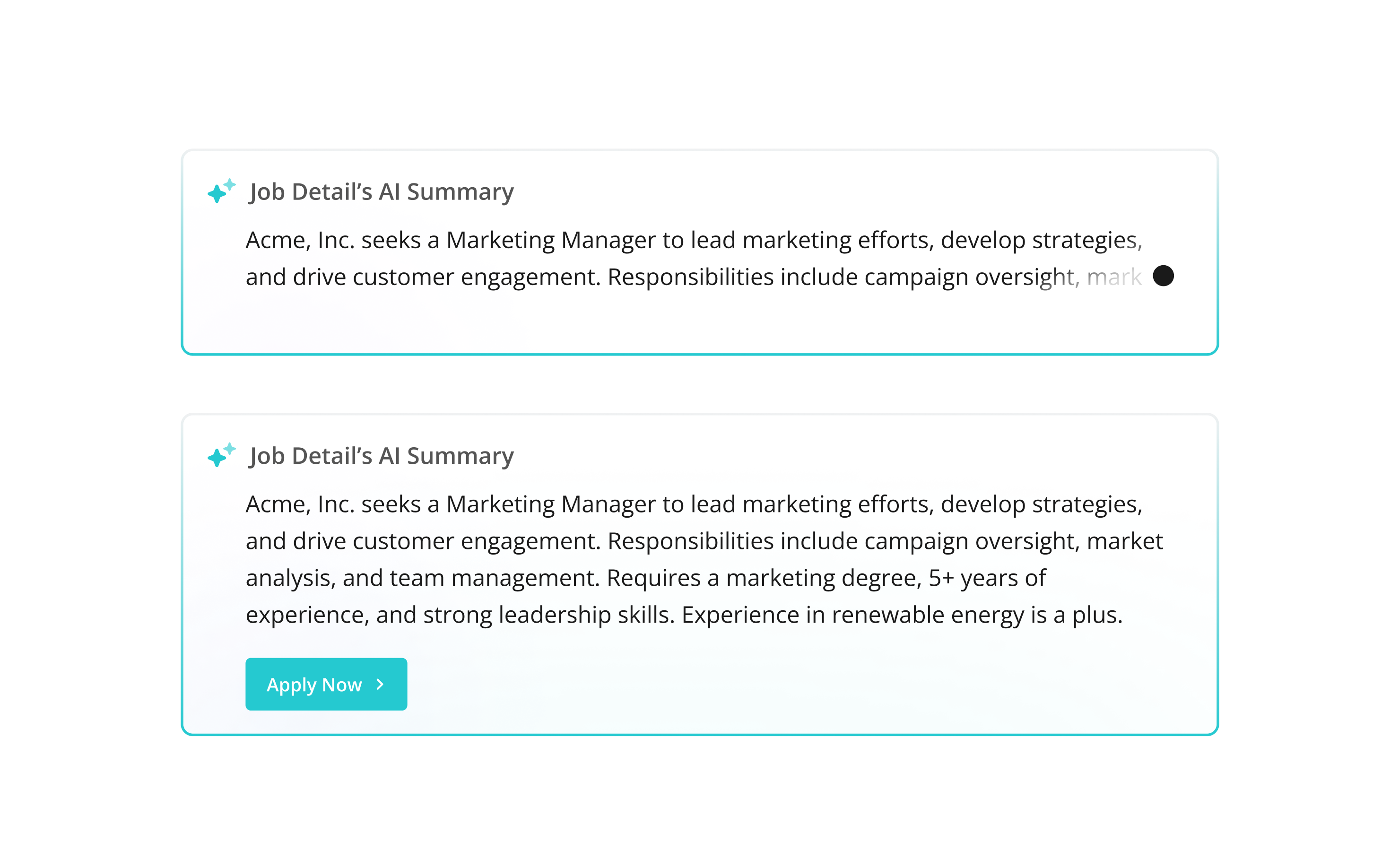
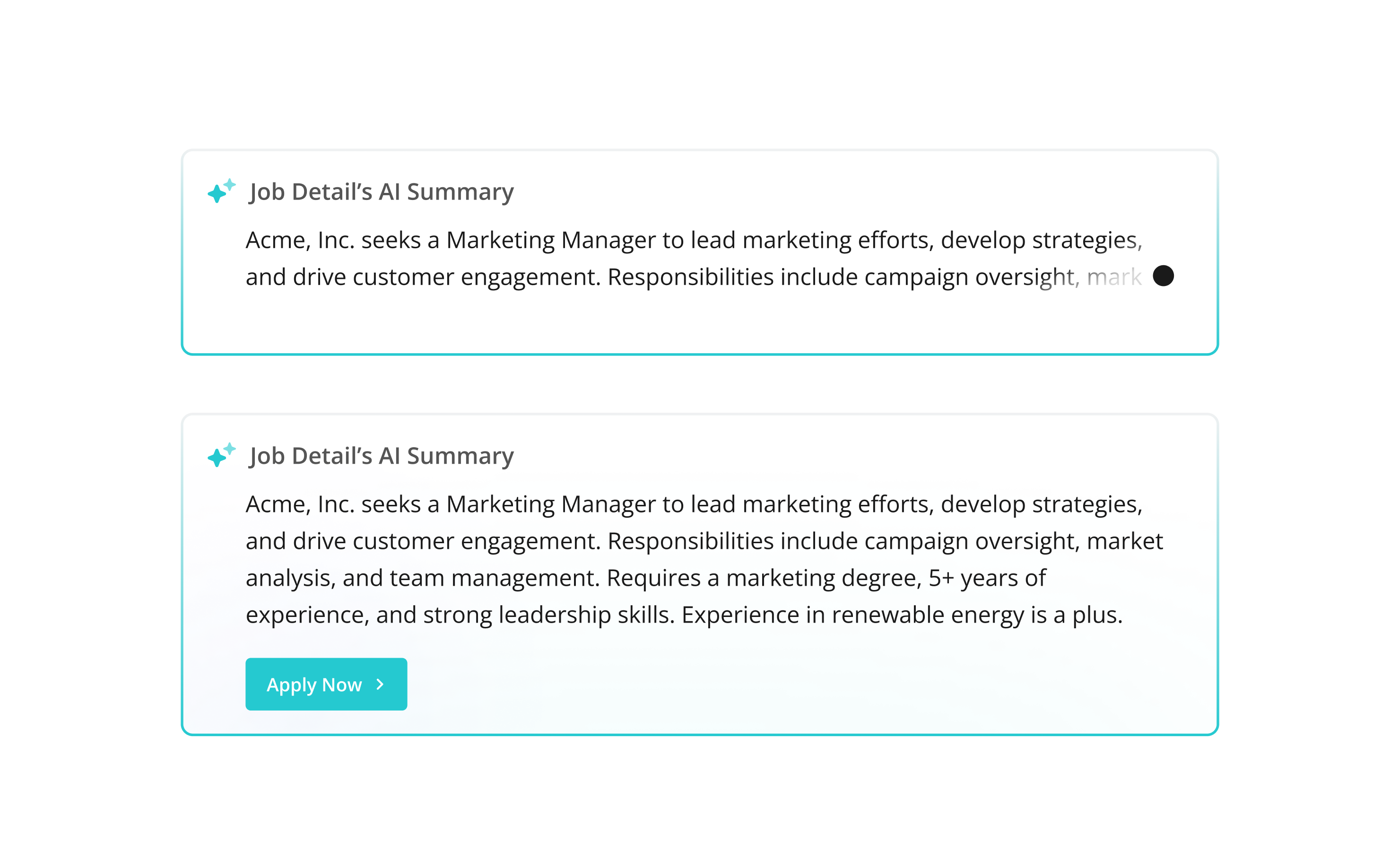
I explored concise, AI-generated summaries in both the Job List and Job Details experiences to help candidates get a quicker sense of a role.
The summary needed to add context without replacing the full description or competing with the next step. I treated it as an aid to discovery, not the centerpiece of the experience.